Tanja Major on German Pioneers in Mushroom Dyeing

Creativity with Mushrooms – A Heartfelt Thank You to the Pioneers
Karin Tegeler and Rita Lüder
~ by Tanja Major
Karin Tegeler – Textile Craft
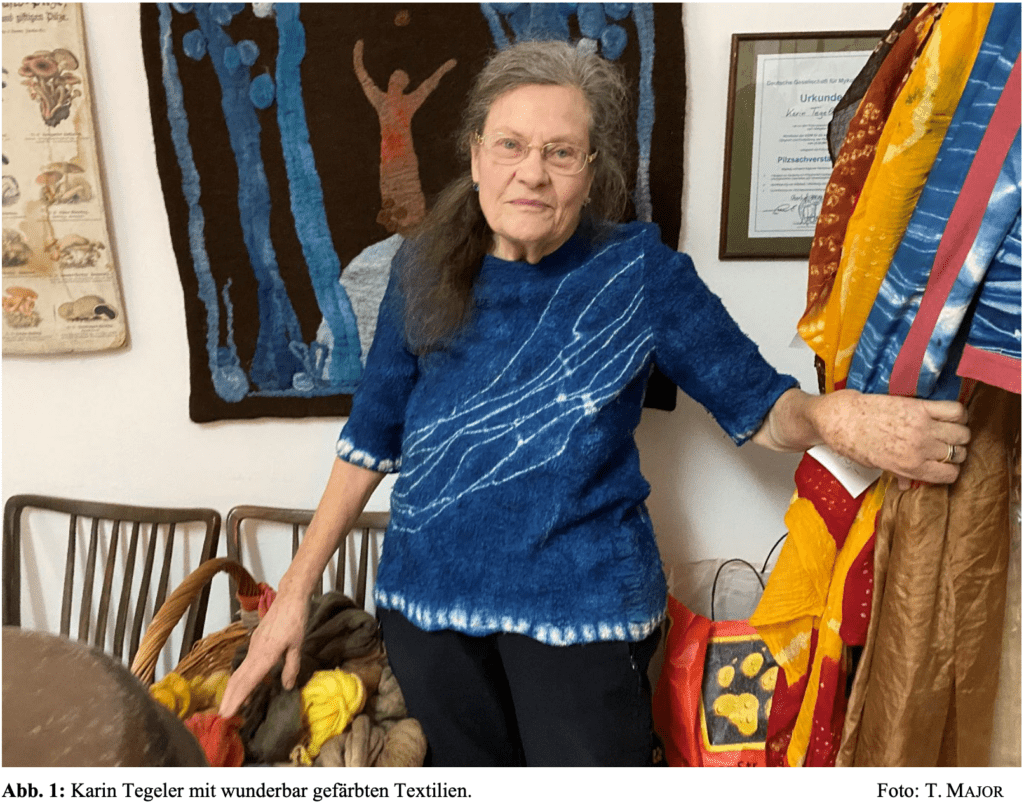
Fig. 1: Karin Tegeler with beautifully dyed textiles. Photo: T. MAJOR
Since around 1990, Karin Tegeler (born 1942) learned the techniques of dyeing with plant dyes and pre-mordanting with cold alum from Johannes Haborth in Hamburg, as well as indigo dyeing with various vats. At that time, she was still working at the Wallnau Bird Reserve on the island of Fehmarn. In 1996, she became self-employed with her “Textile Craft” studio and offered courses in plant dyeing, felting, tapestry weaving, and spinning, as well as a joint course with Johannes.
She also ran a spinning group where a participant named Toni Walter showed her the book “Dyeing with Mushrooms” by Carla and Erik Sundström. The color palette of mushrooms and lichens presented in that book demonstrated that such hues could not be achieved with plants alone.
This inspired her to visit the Black Forest Mushroom Exhibition in Hornberg, led by Walter Pätzold (1948–2011), where she attended courses on Cortinarius species, microscopy, and more.
At the same time, a friend named Roswitha Kreit had purchased a house in Sweden and invited Karin to accompany her there.
The trip to Sweden was a great success: the forests there are characterized by an impressive diversity of mushrooms and lichens. Karin collected various species and began dyeing wool and silk with them. From around 2000 onward, she dyed with species such as velvet roll-rim (Tapinella atrotomentosa), tinder fungus (Fomes fomentarius), dyer’s polypore (Phaeolus schweinitzii), and later also sulfur tufts (Hypholoma spp.), tooth fungi (Hydnellum spp.), Dermocybe species, and many others, as well as lichens. From then on, she regularly traveled independently to Sweden to explore the forests.
Fig. 2: This diversity of colors requires mushrooms for dyeing. Photo: T. MAJOR
Making Ash Lye to Modify Certain Shades
Begin by filling a large pot halfway with wood ash and pour boiling water over it. Let the mixture stand for 2–3 days. The ash will settle at the bottom. Then filter the lye through a cloth to remove charcoal particles.
For successful dyeing—for example with blue-producing dyes—a specific pH value is necessary:
For animal fibers such as wool: pH 9
For plant fibers such as linen and cotton: pH 10
If the pH value is higher, simply dilute the lye with water. The lye can then be used similarly to ammonia for dyeing.
Instructions for preparing cold mordant can be found here:
https://www.textiles-werken.de/pilze-faerben.html
By chance, she learned about the 14th IFFS (International Fungi & Fibre Symposium) in Sweden in 2010 and immediately registered.
The first symposium was organized in 1980 in Mendocino, California, by Miriam C. Rice and Dorothy Beebee, founders of the IFFS. Since then, it has taken place approximately every two years in various countries—19 times in 9 countries so far. The venue is selected by members of the International Fungi and Fiber Federation, founded in 1999 during the 9th symposium in Norway.
The event is a non-profit gathering of mushroom, fiber, and dye enthusiasts—researchers, hobby mycologists, dyers, artisans, experimentalists, and the curious. It is an opportunity to share mushroom-related work from recent years, exchange knowledge, build friendships, learn about different cultures and histories, and recognize how deeply we are connected to the wonderful, fragile yet powerful fungi around us.
Further information about the history of the event and the International Mushroom Dye Institute can be found here:
https://www.mushroomsforcolor.com/a-brief-history-of-the-art-of-mushroom-dyeing-2/
In 2010, Karin traveled to Uppsala, Sweden, to attend the 14th International Fungi & Fibre Symposium. Unfortunately, Miriam C. Rice (1918–2010) had passed away by then, and Karin did not have the opportunity to meet her in person.
She learned that registration was possible through Carla Sundström (1941–2024), who was also a lecturer there. Other organizers and lecturers included Hjördis Katarina Lundmark, Liza Johansson, Monika Svensson, Ann-Christine Strömberg-Homlund, Matthias Andersson (University of Umeå), Dr. K. Perumal (India), and Preben Graae Sørensen (Denmark).
Fig. 3: Karin Tegeler in Sweden preparing mushroom dye broth. Photo: T. MAJOR
Karin was invited to give a lecture on cold mordanting AL (named after Johannes Haborth), as this method was previously unknown to the participants. Until then, boiling alum mordanting had been standard practice, which had many disadvantages for wool.
She also learned the technique of papermaking from mushrooms. In the 1970s, Miriam C. Rice had experimented with mushroom dyes and discovered that paper could be made from the leftover mushroom material after dyeing—an ideal recycling solution.
Research by textile archaeologists (Cardon 2007), scientists such as Bechtold & Mussak (2009), Räisänen (2016), and ethnomycologists (Turner & Cuerrier 2021) has shown that the use of mushroom pigments has a long tradition worldwide. Indigenous peoples along the northwest coast of Canada and North America—such as the Chilkat, Syilx, Skwxwú7mesh, Nlaka’pamux, and Kwakwaka’wakw—used Echinodontium tinctorium (Indian Paint Fungus) for aesthetic and symbolic body decoration. The use of mushroom pigments is likely very ancient.
Rita Lüder – Founder of the PilzCoach Training Program (2012/13)
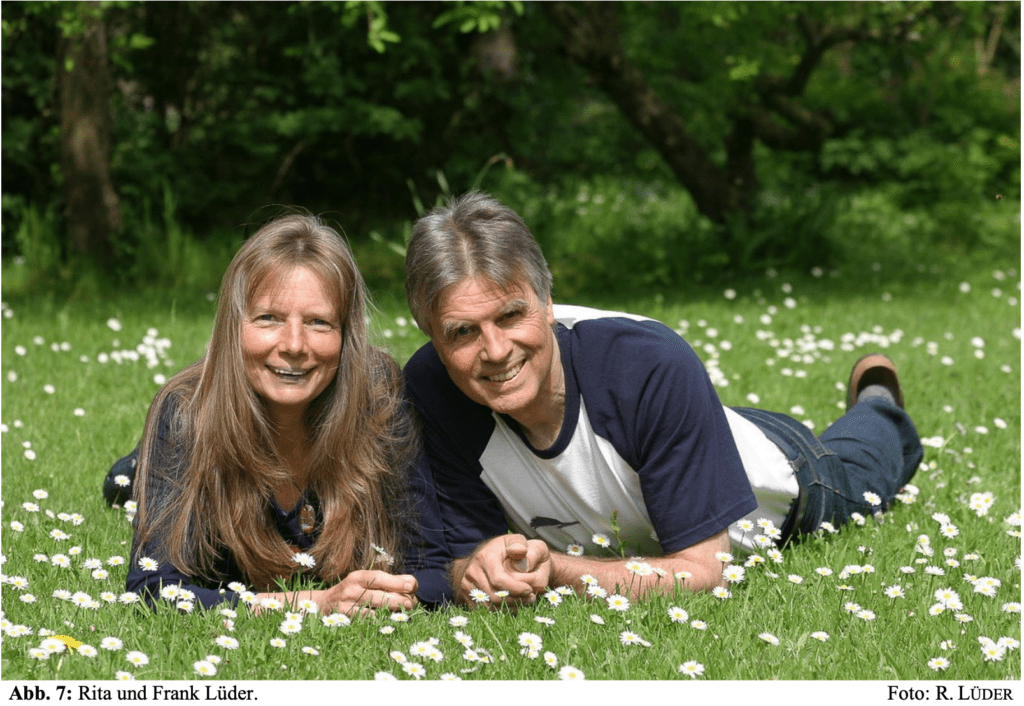
Fig. 7: Rita and Frank Lüder. Photo: R. LÜDER
Rita Lüder (Vice President of the German Mycological Society – DGfM from 2019–2023 and founder of the PilzCoach training program in 2012) had long been involved in dyeing with plants and mushrooms. In 2011, she visited Karin in Fehmarn and conducted dye tests with her. Karin also introduced her to mushroom papermaking.
Wolfgang Friese learned blue dyeing with hawk’s wing mushrooms (Sarcodon squamosus) from Karin—knowledge she had acquired from Carla Sundström—and passed it on to Katharina Krieglsteiner and many others.
In 2015, Karin passed the PSV examination with Andreas Gminder in Thuringia and was then officially able to offer courses as a certified PilzCoach instructor of the DGfM.
In 2016, her guidebook “Leitfaden zum Färben mit Pilzen” (Guide to Dyeing with Mushrooms) was published.
Due to health reasons, Karin Tegeler will no longer be able to offer courses. However, she has donated her mushroom dye samples to the Johann Wolfgang Goethe University in Frankfurt am Main, where they are now displayed in the mycological department.
The PilzCoach – A Multiplier for Fascination and Awareness of Fungi in the Ecosystem
In 2012, Rita Lüder was asked to take over youth development within the DGfM. During the 400-kilometer drive home from Frankfurt with her husband Frank, the first ideas for a new training program were developed. The goal: to create multipliers who could pass on enthusiasm and knowledge about fungi outside traditional school and university systems.
Thus, the “PilzCoach” was born.
The training includes ecology, environmental protection, basic mycology, pedagogy, artistic practice, safety, excursion planning, and edible and poisonous mushrooms. After intensive discussions—including whether PilzCoaches may cook mushrooms with groups—the consensus was: yes, provided the species are clearly identifiable and on an approved list.
From 2013 onward, the first PilzCoach training courses were held. The program consists of three double-day modules over at least six months. Since then, instructors meet annually to exchange experiences and develop new ideas.
The PilzCoach program remains highly successful and continues to grow in importance within nature conservation and environmental education. Rita Lüder has opened the door to the world of fungi for many people. Through her creative work—illustrations, photographs, texts, posters, flyers, and more—she has significantly enriched and supported the DGfM and its instructors.
A Final Word of Thanks
In a time of profound change in many areas, we should strengthen solidarity, mutual respect, and the commitment of volunteers and organizations—young and old—who dedicate themselves to nature conservation, environmental education, and research.
We, the mushroom dyers and PilzCoach instructors and coaches, would like to express our deepest gratitude to Rita and Karin. It is truly wonderful that they have passed on their tireless dedication, profound knowledge, and joy in the world of fungi to all of us.
Thank you for your support in research: Rita Lüder, Karin and Armin Tegeler, Wolfgang Friese, Ute Künkele, Peter Karasch, Stefan Fischer.
A word on the author
Since 2017, Tanja Major has been deeply engaged in mycology as a nature enthusiast. Her main focus lies in the production of paper from mushrooms as well as the extraction of natural dyes from fungi. She organizes the Instagram account of the German Mycological Society (DGfM) and is a certified mushroom expert and mushroom coach teacher (PilzCoach). She is also an artist and mycologist of the German mushroom dyeing group.
In her artistic practice, Tanja Major explores fungi as a source of innovative materials, as pigments for painting and dyeing, and as the basis for sustainable processes. In recent years, she has focused particularly on the development of paper made from mushrooms. Her work moves at the intersection of science and art and has been presented in international exhibitions.